



Guest User
Login
#0 Rank0 Coins
Dashboard
 Notification
 Coins
CoinsGames Categories
 New Games
Connect with us



 sports
 action
 cricket
 arcade
 racing
 adventure
 girls
girls boys
boys hot
hot moresportsactioncricketarcaderacingadventuregirlsboyshotmore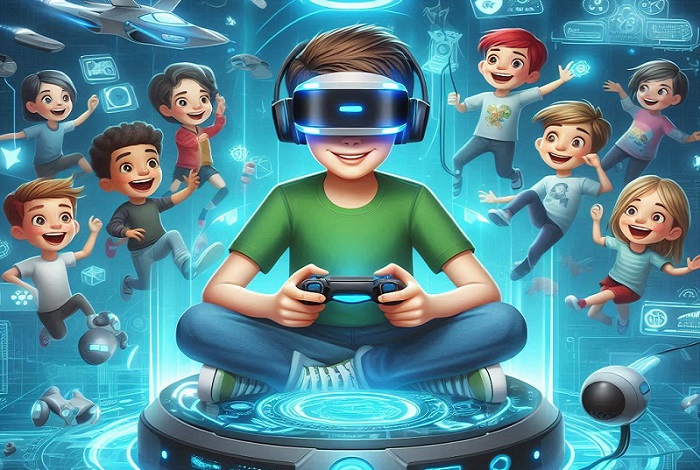
Gaming has come a long way offering plenty of opportunities for players to enjoy the immersive worlds. The introduction of metaverse has even made it possible for gamers to create the real-world value with the help of the digital creations and NFTs.
Like other industry, gaming has also been touched amazingly by the regular technological advancements in the last few years. And, in this regard, metaverse is also no exception. With the offerings of a more immersive environment by the advanced games, it has become normal to consider them as some integral components of the wider metaverse ecosystem.
As per the survey made by Ernst and Young, more than 95% executives from the gaming industry say that gaming stands at the center of the metaverse these days. While talking theoretically, metaverse could include virtual reality (VR) as its most important part. However, here the most important point to remember is that interconnectedness will be acted as the center of the metaverse.
Players will get the freedom to effortlessly transition between different types of games and experiences while also carrying their assets and virtual identities along with their achievements with them.
This level of interoperability could only be achieved if developers focus on how to create shared universes and cross-platform experiences. See what Epic Games CEO Tim Sweeney who is also known for creating the Fortnite gaming universe said in 2020, while explaining what he thinks about the gaming in the metaverse:
“A move away from a whole bunch of walled gardens into something that’s increasingly open and comes to resemble, by the end of this decade, an open metaverse, in which players get together with their friends and they go from game experience to game experience, staying together as a group as friends, going across all platforms and not having to worry about what company made the device they’re on, or what company’s operating the servers they’re playing on as they go through these experiences.”
As we all know that Fortnite is the frontrunner in the field of metaverse so they are known for providing players with an amazing immersive environment where gamers can have plenty of entertainment experiences to enjoy while also exploring the game itself.
Augmented reality (AR) games that have also surpassed the popularity of digital gaming elements in the real world are also a very imperative part of the gaming industry. Pokémon Go gained popularity in this field and we are looking forward to witness more AR technology inspired games with the regular advancements in the field of technology.
Web3 technology backed by decentralized protocols and blockchain, is playing a pivotal role in revolutionizing the gaming industry as they enable players to enjoy the true digital possession and control over their in-game assets.
Players can’t buy assets in many games. However, some kind of in-game clothes, accessories as well as other items are associated with the individual games, not with the players of avatars.
Web3 technologies are going to allow players to trade, sell or transfer their multiple virtual items across multiple platforms as NFTs. This way players will not be able to enjoy a seamless gaming experience, but they will also expect to meet with various revenue streams, while also experiencing an environment where the support for the thriving digital economy will also be available.
Gamers can enjoy a transparent and secure system for in-game ownership, transactions and asset provenance with the help of web3-enabled games backed by the blockchain technology. There will be no need for any intermediaries with this approach. Even players will also get a chance to enjoy the greater control over their overall gaming experiences.
With the help of user-generated content and player-driven economies, developers will also get the leverage of creating more engaging games.
Gaming has already evolved as a widely appreciated profession and that is going to be in trend for many years in the future as internet technologies continue to rise. With the rapid growth of web3 technology, there is no surprise to see the upsurge in the play-to-earn (P2E) models, through which gamers could easily manage to monetize their in-game activities and achievements as well. In the improved gaming world of P2E, gamers will have an advantage to complete multiple tasks, fight against other players or move forward through levels.
Players can use those rewards, which will be seen as in-game assets or tokens in the form of NFTs that will be available to sell, trade or redeem for real-world value. Players can expect to explore more earning opportunities with the help of P2E models that democratize gaming especially in those areas where the traditional financial systems are available in the limited number.
The future of gaming is very bright and metaverse and web3 technologies are all set to pave the way for providing players with interconnected, immersive experiences. We can say that these innovations are playing a very important role in reshaping the gaming, creating a more unique and diverse environment with the offerings of wider opportunities for both developers and players.

Atmegame.com is a completely new platform for the online games lovers.The best part is that all games available on our website are free and can be enjoyable on multiple devices, including desktop, mobile phones, tablets, and iPhones or iPads.